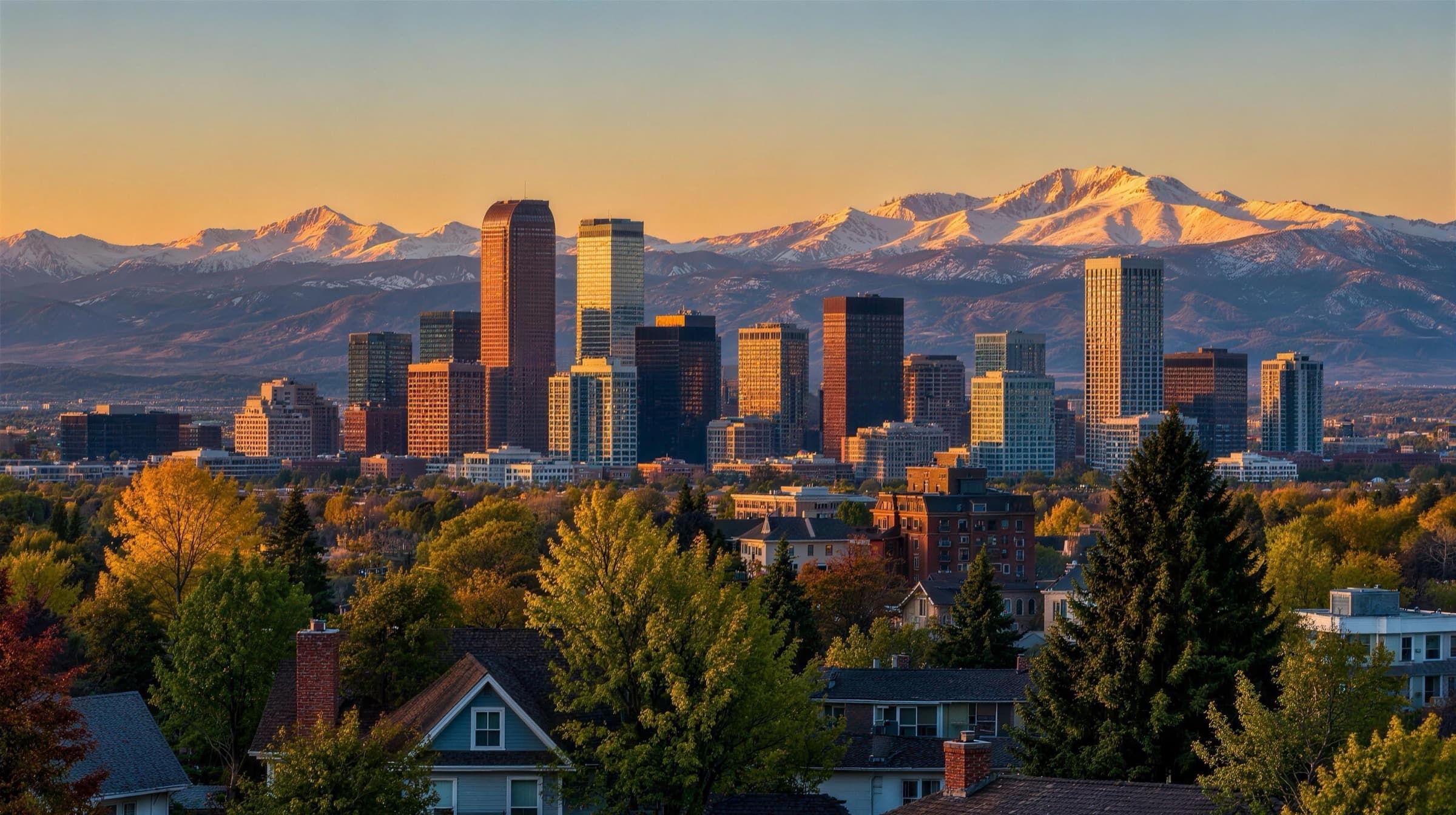
Denver, Colorado
Denver property management with transparent pricing and a license handled for you
- Population
- 740,613 (2025 Census estimate)
- Average rent
- $1,922 avg. apartment rent (Sep 2026)
- Median home value
- $636,400 median (ACS 2024)
- County
- City and County of Denver
Denver has the deepest renter pool in the metro and the heaviest rulebook. Its 740,613 residents include large payrolls at the City and County of Denver, Denver Public Schools, the State of Colorado, Denver Health, United Airlines, HCA HealthONE and the University of Denver, so demand runs from Capitol Hill studios to Green Valley Ranch townhomes near DIA. Neighborhood spreads are wide: RentCafe’s September 2026 averages range from $1,698 in Capitol Hill to $2,970 in Cherry Creek, against a citywide $1,922.
For most owners this is an appreciation hold, not a cash-flow play. With a $636,400 median home value (ACS 2024), gross yield on a typical house is thin, so returns come from short vacancies, clean turnovers and avoiding mistakes that cost a month of rent. That matters right now. Metro vacancy sat near 5.7% in Q3 2026 and most Denver submarkets showed flat or falling rents year over year, so a listing priced $100 too high can sit while the one next door leases.
Every Denver rental, including single-family homes since January 1, 2024, needs a city residential rental license backed by a qualified-inspector inspection and renewed every four years. The housing stock adds its own work: 1920s brick bungalows in Wash Park and Sloan’s Lake, 19th-century Victorians in Baker and converted mansions in Capitol Hill need closer attention to sewer lines, boilers and required disclosures. We handle the license, the inspection scheduling and the pricing.
What drives rental demand in Denver
- City and County of Denver (13,584 employees) and the State of Colorado (10,686)
- Denver Public Schools (12,693) and the University of Denver
- Denver Health (9,502) and HCA HealthONE hospitals
- United Airlines hub at DIA (7,230 employees)
- RTD A, W, D and L rail lines through the urban core
Denver neighborhoods we manage in
- Capitol Hill
- LoHi / Highland
- Washington Park
- RiNo & Five Points
- Central Park (Stapleton)
- Cherry Creek
- Sloan’s Lake
- Baker
- Congress Park
- Park Hill
- Green Valley Ranch
- Berkeley / Tennyson
ZIP codes served: 80203, 80205, 80206, 80209, 80211, 80212, 80238, 80249.
Local knowledge
What Denver landlords need to know
A residential rental license is mandatory
Denver has required a residential rental license for multi-unit properties since January 1, 2023 and for single-unit rentals since January 1, 2024. Licenses run four years, renewal opens 90 days before expiry, fees run $50 to $500 by unit count, and a license does not transfer when you sell. Operating without one risks fines up to $5,000. Denver leases must also include the city’s Tenant Rights & Resources handbook, a lease copy within 7 days and, since January 1, 2025, a bilingual habitability-reporting clause.
Old housing stock needs a maintenance plan
Much of central Denver was built before 1940: Capitol Hill’s average structure dates to about 1920, Wash Park is mostly 1900–1940 brick bungalows and Craftsmans, and Baker’s historic district holds hundreds of 19th-century Victorians. Budget for sewer-line scopes, boiler and radiator service, radon and lead-paint disclosures, and fall sprinkler blowouts. Hail claims on roofs are routine across the city.
Central Park carries assessments and metro-district taxes
Homes in Central Park (formerly Stapleton) pay a master community association assessment of about $58 a month (January 2026) plus metro-district property taxes that can reach roughly $3,000–$3,200 a year on a median home. Verify the exact figure on your tax bill before you set rent, because it changes your net yield more than most owners expect.
Pricing accuracy matters in a soft market
Metro vacancy was about 5.7% in Q3 2026, Northmarq found 31 of 33 Denver submarkets down year over year in Q1 2026, and CBRE projects only 1–2% rent growth for 2026. The new-construction pipeline for 2026 is the lowest in a decade, which should firm rents later, but today the first two weeks of a listing decide how long it sits.
Sources: RentCafe: Denver average rent · Census Reporter: Denver, CO · City of Denver: Residential rental property licensing
Services
Property management services in Denver
Same published pricing in every city: 8% of collected rent, 50% leasing fee, no setup, vacancy or markup fees.
Full-Service Property Management
Full-service residential property management in Denver for 8% of collected rent. Leasing, rent collection, maintenance at cost, inspections, accounting and a 21-day leasing guarantee.
Learn moreTenant Placement
Lease-only tenant placement in Denver: pricing, photos, showings, full screening and a Colorado-compliant lease for a flat fee. Keep self-managing with a 6-month tenant guarantee.
Learn moreMultifamily Property Management
Multifamily property management in Denver for duplexes, fourplexes and apartment buildings up to 50 units. Per-unit pricing, leasing, turnovers, maintenance and investor-grade reporting.
Learn moreCondo & Townhome Management
Rental management for Denver condos and townhomes. We coordinate with your HOA, handle move-in rules and rental caps, and lease your unit to screened tenants for 8% with no junk fees.
Learn moreMaintenance & Inspections
Rental property maintenance in Denver with a 24/7 emergency line, licensed vendors billed at cost with zero markup, and documented move-in, annual and move-out inspections.
Learn moreAccidental Landlord Services
Relocating, deployed, or can't sell at your price? Denver Rental Managers turns your home into a hands-off rental: pricing, tenant placement, management and Colorado compliance for 8%.
Learn moreDenver property management FAQs
How much does property management cost in Denver?
Full-service property management in Denver costs 8% of the rent we actually collect, with a $139 monthly minimum. Leasing is 50% of one month’s rent, charged only when a tenant signs. There are no setup fees, no vacancy fees and no markup on maintenance invoices, and your Denver rental license application and renewals are handled as part of the plan.
Do I need a rental license to rent out my house in Denver?
Yes. Denver requires a residential rental license for every long-term rental, including single-family homes since January 1, 2024. You need a passing inspection by a qualified inspector, the license lasts four years, fees run $50 to $500 by unit count, and it does not transfer to a buyer. Renting without one can bring fines up to $5,000.
How much does a house rent for in Denver?
Averages vary widely by neighborhood and home type. RentCafe put Denver’s average apartment rent at $1,922 in September 2026, ranging from about $1,698 in Capitol Hill to $2,970 in Cherry Creek. TurboTenant’s July 2026 data showed a median near $2,400 for single-family homes and $1,900 for condos. Your home’s rent depends on size, condition and exact location.
How long does it take to rent a home in Denver?
A rent-ready Denver home priced correctly usually leases within a few weeks, which is why we back pricing with a 21-day leasing guarantee. With metro vacancy near 5.7% and rents flat to down year over year, overpriced listings sit. Denver renters weigh light-rail access, parking, in-unit laundry, air conditioning and pet policies heavily, especially in older central neighborhoods.
Ready to hand off your Denver rental?
Get a free rental analysis for your property. We'll show you the rent it should earn, the plan that fits, and the exact fees, before you sign anything.